China trade fairs cover almost every part of the sourcing landscape, from household products and furniture to electronic components, packaging machinery, medical devices, plastics, textiles, and industrial automation.
The right fair matters more than the size of the exhibition.
If you are exploring several unrelated consumer-product categories, the Canton Fair may give you the breadth you need. If you are buying furniture, a specialist show may let you see more of each supplier's physical range. If you are developing an electronic product, the most useful exhibition may not display finished products at all. It may focus on the components that go inside them.
So instead of asking:
Which China trade fair is the biggest?
ask:
Which fair can help me make the next sourcing decision for this product?
The list is organized by sourcing fit rather than rank. Each fair suits a different type of buyer or product.
One principle applies to all of them:
Treat a trade-fair exhibitor as a sourcing lead. Supplier approval requires further checks.
Meeting a company at a booth can help you see products, ask better questions, understand its claimed role, and decide whether it deserves further investigation.
It does not, by itself, verify the company's legal identity, actual manufacturing role, relationship with the production site, production capability, capacity, destination-market compliance, or ability to reproduce the displayed product consistently in bulk.
The sourcing process continues after you leave the exhibition hall.
Trade-fair dates, venues, exhibition scope, and registration requirements can change. Confirm the current edition with the official organizer before booking travel.
How to Choose the Right China Trade Fair
Before you build a sourcing trip around a well-known exhibition, look at six things.
1. Product fit
Start with the product.
Are you looking for:
- finished consumer goods;
- private-label products;
- furniture;
- fabrics;
- electronic components;
- plastic materials;
- automotive parts;
- industrial equipment;
- packaging;
- medical equipment?
A large general fair may include your category, but that does not mean it has the best concentration of suppliers for what you need.
Sometimes a smaller specialist fair may put more relevant suppliers within walking distance.
2. Supplier concentration
A huge exhibition can still be inefficient if only a small part of it matters to your project.
If your category occupies a few halls inside a very broad fair, you may spend a lot of time moving between unrelated exhibitors.
A specialist show may give you fewer exhibitors overall but more relevant conversations in the same amount of time.
3. Technical depth
Think about how far the supplier conversation needs to go.
For a straightforward finished product, the first discussion may focus on the product itself, basic specifications, packaging, MOQ, and commercial terms.
For a more technical project, you may need to discuss:
- materials;
- drawings;
- components;
- tooling;
- manufacturing processes;
- testing;
- production equipment;
- engineering changes.
That is where a specialist industry exhibition can become more useful.
4. Your sourcing stage
Not every buyer attending a fair is trying to make the same decision.
You may be at:
Product discovery
→ Supplier discovery
→ Initial screening
→ Technical discussion
→ Quotation or sample follow-up
A buyer who is still exploring a product category needs a different type of fair from a buyer who already has drawings, specifications, and a defined commercial target.
5. Geography
The exhibition is only one part of the trip.
A sourcing visit becomes more valuable when you can combine the fair with:
- meetings with shortlisted suppliers;
- sample reviews;
- factory visits;
- another relevant exhibition;
- visits to existing suppliers.
Do not automatically spend the entire trip inside the exhibition center.
6. Timing
Finally, ask what decision the exhibition needs to support.
If you have to select a supplier before the fair takes place, the fair is too late for that project.
A useful exhibition at the wrong point in the sourcing timeline can still be the wrong trip.
15 China Trade Fairs at a Glance
| Trade Fair | City | Best For | Next Confirmed Edition | Official Site |
|---|---|---|---|---|
| Canton Fair | Guangzhou | Broad multi-category sourcing | Oct 15 to Nov 4, 2026 | https://www.cantonfair.org.cn/en-US |
| Yiwu International Commodities Fair | Yiwu | Small commodities and consumer goods | Oct 21 to 24, 2026 | https://www.yiwufair.com/ |
| Shenzhen Gifts & Home Fair | Shenzhen | Gifts, promotional and lifestyle products | Oct 20 to 23, 2026 | https://oct.chinagiftsfair.com/ |
| CIFF Guangzhou | Guangzhou | Furniture and furniture supply chain | Mar 18 to 21 & Mar 28 to 31, 2027 | https://www.ciff-gz.com/en/ |
| China Toy Expo | Shanghai | Toys and children's products | Oct 21 to 23, 2026 | https://www.china-toy-expo.com/en |
| HOTELEX Shanghai | Shanghai | Hospitality and foodservice | Mar 30 to Apr 2, 2027 | https://en.hotelex.cn/ |
| CHINAPLAS | Shenzhen | Plastics, materials and processing | Apr 13 to 16, 2027 | https://www.chinaplasonline.com/CPS/idx/eng |
| Sino-Pack / PACKINNO | Guangzhou | Packaging machinery and materials | Mar 4 to 6, 2027 | https://www.chinasinopack.com/ · https://www.packinno.com/ |
| China International Industry Fair | Shanghai | Industrial manufacturing and automation | Oct 12 to 16, 2026 | https://www.ciif-expo.com/ |
| electronica Shanghai | Shanghai | Electronic components and systems | Apr 14 to 16, 2027 | https://www.electronicachina.com.cn/en/important-exhibitions-for-the-industry |
| China International Hardware Show | Shanghai | Hardware and tools | Sep 28 to 30, 2026 | https://www.hardwareshow-china.com/ |
| Automechanika Shanghai | Shanghai | Automotive parts and aftermarket | Dec 2 to 5, 2026 | https://automechanika-shanghai.hk.messefrankfurt.com/shanghai/en.html |
| Intertextile Shanghai Apparel Fabrics | Shanghai | Fabrics and garment accessories | Aug 25 to 27, 2026 | https://intertextile-shanghai-apparel-fabrics-autumn.hk.messefrankfurt.com/shanghai/en.html |
| China Beauty Expo | Shanghai | Beauty, private label and OEM/ODM | May 12 to 14, 2027 | https://www.chinabeautyexpo.com/ |
| CMEF | Beijing | Medical devices and healthcare equipment | Oct 21 to 24, 2026 | https://www.cmef.com.cn/en/MExhibition |
1. Canton Fair, Guangzhou
Best for: broad, multi-category supplier discovery.
The China Import and Export Fair 1 , better known as the Canton Fair, covers a broad range of export-oriented consumer and industrial products across three phases.
The 140th Canton Fair is scheduled in three phases: October 15 to 19, October 23 to 27, and October 31 to November 4, 2026. Its official category structure includes electronics, industrial manufacturing, vehicles, hardware, household products, furniture and building materials, gifts, textiles, apparel, toys, medical products, and many other export categories.
Official website: https://www.cantonfair.org.cn/en-US
Consider the Canton Fair when...
Your sourcing objective is still relatively broad.
For example, you may be:
- exploring several categories;
- building a new supplier pool;
- looking for new product directions;
- sourcing unrelated products during one trip;
- comparing a large number of potential suppliers.
That breadth is one of the fair's main advantages.
It may be less useful when...
Your requirement is highly specialized and you need a concentrated group of suppliers working with one material, process, component system, or technical category.
In that situation, a specialist fair may make better use of your time.
2. Yiwu International Commodities Fair, Yiwu
Best for: small commodities and assortment-heavy consumer products.
The 32nd Yiwu International Commodities Fair 2 is scheduled for October 21 to 24, 2026 at Yiwu International Expo Center. Its official scope covers daily consumer goods, hardware and tools, electronics and electrical products, toys, machinery, sports and outdoor products, office and cultural products, and related categories.
Official website: https://www.yiwufair.com/
Consider Yiwu when...
Your business depends on carrying a broad assortment of consumer products rather than sourcing one technically complex item.
That may include wholesalers, variety retailers, promotional-product buyers, distributors, and buyers exploring multiple everyday consumer categories.
Do not assume...
That a supplier will automatically offer a lower MOQ or lower price simply because you meet them in Yiwu.
MOQ, customization, packaging, price, export handling, documentation, and payment terms still depend on the supplier and the order.
The fair gives you access to potential suppliers, while commercial fit still needs to be assessed.
3. China (Shenzhen) International Gifts & Home Products Fair, Shenzhen
Best for: gifts, promotional products, household goods, lifestyle products, and customization.
The autumn edition 3 is scheduled for October 20 to 23, 2026 at Shenzhen World Exhibition & Convention Center. Its official categories include household products, home decoration, textiles, gifts and promotional items, stationery, bags, electronics, beauty products, outdoor goods, and packaging. The organizer also provides an exhibitor list and hall-planning tools.
Official website: https://oct.chinagiftsfair.com/
Consider this fair when...
You are developing:
- branded promotional products;
- corporate gifts;
- household ranges;
- lifestyle products;
- customized consumer products.
Because the product focus is narrower, relevant suppliers may be easier to compare than at a large general exhibition.
What to investigate
If customization matters, ask about it early.
Useful topics include:
- neutral packaging;
- private labeling;
- artwork;
- product customization;
- samples.
Do not leave those discussions as verbal booth conversations. Important requirements should eventually be recorded and confirmed in writing.
4. CIFF Guangzhou, Guangzhou
Best for: furniture, commercial furniture, interiors, and the furniture manufacturing supply chain.
The next confirmed CIFF Guangzhou 4 will run in two phases: March 18 to 21 and March 28 to 31, 2027. The first phase covers home furniture, home decoration and textiles, and outdoor leisure. The second covers office and commercial space, together with furniture machinery, equipment, and materials.
Official website: https://www.ciff-gz.com/en/
Consider CIFF when...
Furniture is one of the main reasons for your sourcing trip.
The specialist environment can make it easier to compare:
- furniture ranges;
- materials;
- finishes;
- commercial furniture;
- home furniture;
- production equipment and components.
Kelsy Practical Note: product size changes the value of booth space
Furniture is a good example of why a specialist fair can sometimes be more practical than a general one.
Furniture takes up space.
At a broad exhibition, one supplier may only have room to display a small part of its collection. At a furniture-focused show, physical product display is central to the event, so buyers may have a better opportunity to compare ranges and series.
A specialist fair is useful here because furniture needs display space.
It means the physical nature of the product should influence which exhibition you choose.
5. China Toy Expo, Shanghai
Best for: toys, educational products, hobby products, children's products, and related supply chains.
China Toy Expo 5 is scheduled for October 21 to 23, 2026 in Shanghai. Its official scope includes collectible toys, dolls and plush products, smart toys, educational products, wooden toys, electronic toys, outdoor products, games, materials, equipment, and related services.
Official website: https://www.china-toy-expo.com/en
Consider this fair when...
Toys are a meaningful part of your sourcing plan and you want a more concentrated supplier environment than a general consumer-products fair can provide.
Important boundary
Do not confuse seeing compliance-related documents with completing compliance work.
A displayed product, test report, or certificate is only one input. You still need to check the product against your destination market's requirements.
Product safety requirements can depend on the exact item, age group, materials, intended use, labeling, and market.
You can photograph or collect copies of relevant certificates at the booth, but treat them as material for later verification.
6. HOTELEX Shanghai, Shanghai
Best for: hospitality, restaurants, commercial kitchens, bakery, coffee, beverage, and foodservice.
HOTELEX Shanghai 2027 6 is scheduled for March 30 to April 2 at the National Exhibition and Convention Center in Shanghai. Its official scope includes catering equipment, tableware, food and beverage, coffee and tea, bakery, food machinery, packaging, and related hospitality categories.
Official website: https://en.hotelex.cn/
Consider HOTELEX when...
You source for:
- restaurants;
- hotels;
- commercial kitchens;
- foodservice distributors;
- bakery businesses;
- coffee and beverage operations;
- hospitality projects.
The concentration of hospitality and foodservice suppliers can make the event more useful when those categories are central to the project.
Kelsy has personally attended HOTELEX as part of her sourcing work.
Even at HOTELEX, each exhibitor still needs to go through the normal supplier approval process.
7. CHINAPLAS, Shenzhen in 2027
Best for: plastics, rubber, materials, molding, processing, and upstream manufacturing.
The next confirmed CHINAPLAS 7 will run April 13 to 16, 2027 at Shenzhen World Exhibition & Convention Center. CHINAPLAS alternates between Shanghai in even-numbered years and Shenzhen in odd-numbered years.
Official website: https://www.chinaplasonline.com/CPS/idx/eng
Consider CHINAPLAS when...
The important sourcing questions come before the finished product.
For example:
- Which plastic material should we use?
- Which molding process may suit the part?
- Who can supply a specific resin, compound, film, or production technology?
- Which equipment is needed to manufacture it?
If you are developing a plastic product, the best sourcing fair may be one where very few finished versions of your product are displayed.
Sometimes the most useful sourcing fair is upstream from the product you eventually plan to buy.
8. Sino-Pack / PACKINNO, Guangzhou
Best for: packaging machinery, packaging systems, packaging materials, labeling, and production-line applications.
Sino-Pack 8 and PACKINNO 9 will run concurrently from March 4 to 6, 2027 at the China Import and Export Fair Complex in Guangzhou. Sino-Pack covers packaging machinery and systems including filling, sealing, wrapping, labeling, coding, automated packaging, and logistics solutions.
PACKINNO complements the machinery exhibition with packaging products and material-related sourcing.
Official websites:
https://www.chinasinopack.com/
https://www.packinno.com/
Consider these fairs when...
Packaging is part of the sourcing problem itself.
That may include:
- filling equipment;
- sealing machinery;
- labeling;
- automated packing;
- food packaging;
- ecommerce packaging;
- custom boxes or bags;
- functional packaging materials.
For private-label projects, packaging should be considered early. It can affect branding, labels, product protection, carton data, logistics, and production release.
9. China International Industry Fair, Shanghai
Best for: industrial equipment, automation, robotics, machine tools, manufacturing technology, and industrial systems.
The 2026 China International Industry Fair 10 is scheduled for October 12 to 16 at the National Exhibition and Convention Center in Shanghai. Its specialist exhibitions cover machine tools and metalworking, industrial automation, robotics, energy, information and communications, new materials, integrated circuits, and other areas of industrial manufacturing.
Official website: https://www.ciif-expo.com/
Consider CIIF when...
You are sourcing something that belongs inside a production system.
For example:
- production equipment;
- robotics;
- automation systems;
- machine tools;
- industrial components;
- manufacturing technology.
Technical exhibitions become far more useful when the buyer arrives with a defined process or performance problem.
Asking a supplier for "your best machine" rarely creates a meaningful comparison.
10. electronica Shanghai, Shanghai
Best for: electronic components, semiconductors, sensors, connectors, PCB, power supplies, and electronic subsystems.
The next confirmed electronica Shanghai 11 will run April 14 to 16, 2027 at Shanghai New International Expo Centre. Official exhibition sectors include semiconductors, embedded systems, sensors, power supplies, connectors, passive components, PCB, test and measurement, assemblies, and subsystems.
Official website: https://www.electronicachina.com.cn/en/important-exhibitions-for-the-industry
Consider electronica Shanghai when...
Your main question is not:
Which finished electronic product should I buy?
but:
What needs to go inside this product, and who can supply it?
That makes the fair particularly relevant to product developers, electronics manufacturers, engineering teams, component buyers, and OEM projects.
It is better understood as an electronics supply-chain exhibition than as a general consumer-electronics fair.
11. China International Hardware Show, Shanghai
Best for: hardware, tools, DIY products, fasteners, locks, and related categories.
The 2026 China International Hardware Show 12 is scheduled for September 28 to 30 at Shanghai New International Expo Centre.
Official website: https://www.hardwareshow-china.com/
Consider CIHS when...
Your sourcing categories include:
- hand tools;
- power tools;
- hardware;
- fasteners;
- locks;
- garden tools;
- building hardware;
- DIY products.
When hardware is the main sourcing objective, concentrating on a specialist show may save time compared with searching the same products across a general fair.
Supplier-by-supplier comparison still matters. Specifications, materials, testing, packaging, and commercial terms should not be assumed from the exhibition category.
12. Automechanika Shanghai, Shanghai
Best for: automotive parts, components, electrical systems, electronics, and aftermarket products.
Automechanika Shanghai 2026 13 is scheduled for December 2 to 5 at the National Exhibition and Convention Center in Shanghai. Its official product groups include parts and components, electrics and electronics, drive technologies, materials, and other areas of the automotive supply chain.
Official website: https://automechanika-shanghai.hk.messefrankfurt.com/shanghai/en.html
Consider this fair when...
Your sourcing project is clearly automotive.
The fair may be relevant to parts distributors, aftermarket buyers, component buyers, automotive electronics businesses, and sourcing teams evaluating vehicle-related technologies.
Still verify
Automotive requirements can be highly product- and market-specific.
After meeting an automotive exhibitor, you still need to check the component against your drawings, performance requirements, test criteria, documentation requirements, and destination-market obligations.
13. Intertextile Shanghai Apparel Fabrics, Shanghai
Best for: apparel fabrics, textile materials, fibres, yarns, and garment accessories.
Intertextile Shanghai Apparel Fabrics: Autumn Edition 14 is scheduled for August 25 to 27, 2026 at the National Exhibition and Convention Center in Shanghai. The organizer describes it as a sourcing platform for apparel fabrics and accessories and provides exhibitor and product-search tools for visitors.
Official website: https://intertextile-shanghai-apparel-fabrics-autumn.hk.messefrankfurt.com/shanghai/en.html
Consider Intertextile when...
Your sourcing work begins with material selection rather than finished garments.
Relevant buyers may include:
- apparel brands;
- garment manufacturers;
- textile importers;
- fabric buyers;
- buying offices;
- product developers.
If you actually need finished garments rather than fabric or accessories, another sourcing route may be more efficient.
14. China Beauty Expo, Shanghai
Best for: cosmetics, personal care, private label, OEM/ODM, ingredients, packaging, and beauty production.
The next China Beauty Expo Shanghai 15 is scheduled for May 12 to 14, 2027. The organizer positions the Shanghai event as a B2B platform spanning different parts of the beauty industry.
Official website: https://www.chinabeautyexpo.com/
Consider CBE when...
You are developing or expanding:
- a cosmetics brand;
- personal-care products;
- private-label beauty;
- packaging;
- formulations;
- beauty manufacturing.
One advantage of this type of fair is the ability to investigate finished-product opportunities and upstream product-development resources during the same trip.
Important boundary
Cosmetics requirements vary by product and destination market.
After finding an OEM/ODM supplier at the exhibition, you still need to confirm ingredients, labeling, claims, testing, registration, and documentation requirements.
15. CMEF, China International Medical Equipment Fair
Best for: medical devices, hospital equipment, diagnostics, medical electronics, and healthcare technology.
The 94th CMEF 16 is scheduled for October 21 to 24, 2026 at the Capital International Exhibition & Convention Center in Beijing. Official event information identifies medical imaging, in-vitro diagnostics, medical electronics, hospital systems, and other medical-technology sectors within its scope.
Official website: https://www.cmef.com.cn/en/MExhibition
Consider CMEF when...
You are sourcing in the medical-device or healthcare-equipment sector and want concentrated exposure to companies operating in that industry.
Critical sourcing boundary
A CMEF display alone cannot show whether the product can be legally sold in your destination market.
Medical-device classification, registration, testing, documentation, labeling, and conformity requirements must be assessed separately for the actual product and market.
Canton Fair or a Specialist Trade Fair?
Neither is automatically better.
The right choice depends on what you need the fair to do.
| Buyer Need | General Fair | Specialist Fair |
|---|---|---|
| Broad product discovery | Strong | Narrower |
| Several unrelated product categories | Strong | Usually limited |
| Concentration of relevant suppliers | Variable | Often stronger |
| Technical discussion | Category-dependent | Often deeper |
| Materials and components | Variable | Often stronger |
| Large physical product displays | Booth-dependent | May be more useful |
| Upstream supply-chain discovery | Variable | Often stronger |
If you are sourcing furniture, a specialist exhibition may give you more physical products to compare.
If you are sourcing furniture, kitchenware, hardware, and small appliances on the same trip, the breadth of the Canton Fair may be more useful.
They serve different sourcing jobs.
What sourcing decision do you need the fair to support?
That should determine where you go.
How Kelsy Prepares Before a Trade Fair
Kelsy's exhibition work usually starts before she enters the hall.
Review the exhibitor list when there is one
Not every fair publishes a useful exhibitor list in advance.
When one is available, Kelsy reviews company names and does preliminary research to understand:
- whether the company appears to manufacture the relevant products itself;
- which products appear to be its stronger categories;
- whether those products match a current client inquiry;
- whether the company may be worth keeping as a supplier resource for future projects.
The purpose is not to "verify the factory" from a computer.
It is to decide:
Which booths deserve my time?
The company's actual manufacturing role and relationship with the production site still need to be verified if they become relevant to the order.
Contact priority exhibitors
If early communication suggests that an exhibitor has a product that closely matches an active client requirement, Kelsy may contact the supplier before the show and arrange to meet.
But not every exhibition visit is planned weeks in advance.
Sometimes a client inquiry arrives shortly before a relevant fair. In that situation, Kelsy may use the exhibition itself to search for potential suppliers.
The sourcing requirement comes first.
The fair is one way to find the supplier.
What Kelsy Checks at the Booth
Some of Kelsy's first questions are simple:
Are you a factory?
Can you supply neutral English packaging?
Can you apply the buyer's brand?
These questions quickly open up the next part of the discussion.
These questions help with screening, but the supplier's answers still need evidence.
If a supplier says, "Yes, we are a factory," that remains a supplier claim until the relevant company and production relationship are supported by evidence.
Can You Tell Whether an Exhibitor Is Really a Factory?
Not reliably from the booth alone.
One clue Kelsy looks at is the product range.
She asks whether the products on display could reasonably come from the same or related manufacturing processes and equipment.
If the booth contains many unrelated product families that would normally require very different production systems, that can justify more questions about the company's role.
But it is only a screening clue.
An exhibitor may be:
- a manufacturer;
- a trading company;
- a brand owner;
- an exporter;
- a related sales company;
- a manufacturer that outsources some processes;
- a combination of these roles.
So the better question is often not:
"Does this company own a factory?"
but:
"What is this company's actual manufacturing role, and what is its relationship to the site that would produce my order?"
When that matters to the purchasing decision, verify it after the fair.
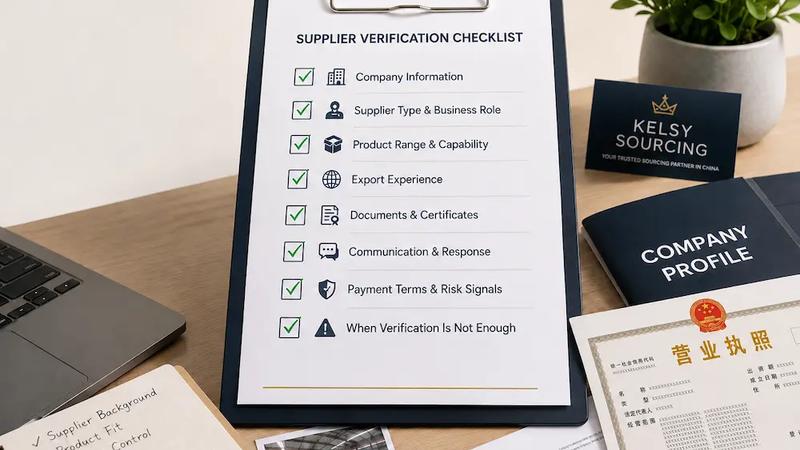
Use the China Supplier Verification Checklist for the separate verification process.
Record More Than Business Cards
After several hours in a busy exhibition hall, suppliers start to blur together.
A business card may tell you who you met.
It leaves out why the supplier was worth another conversation.
Kelsy's field-recording method is deliberately simple:
- add notes in WeChat;
- photograph the booth;
- photograph relevant products;
- photograph or collect copies of relevant certificates for later verification;
- record the factory address where relevant;
- put priority suppliers into her notes for follow-up.
For an important lead, you should be able to reconnect:
Company
→ Booth
→ Product
→ What we discussed
→ Evidence collected
→ What is still unclear
→ Next action
That is much more useful than returning from China with a bag full of catalogues and no clear supplier shortlist.
Communication Is Also a Screening Signal
Kelsy lowers a supplier's priority when the people at the booth are dismissive or unwilling to communicate seriously.
A poor booth interaction is an early communication signal, not proof of factory quality.
The issue is what happens later.
A sourcing project may require repeated discussion about:
- specifications;
- samples;
- packaging;
- artwork;
- changes;
- production;
- nonconformities;
- shipping.
If basic communication is already difficult while both sides are trying to establish a business relationship, that can matter when deciding which supplier deserves further work.
For Kelsy, two useful early filters are:
- whether the apparent quality of the displayed samples is acceptable;
- whether communication with the supplier is workable.
Neither one approves the supplier.
Bulk production may still differ from a good exhibition sample.
What to Do After the Trade Fair
You do not need to investigate every company whose business card you collected.
The fair should help you reduce the supplier pool.
A practical progression is:
Trade-fair exhibitor
→ Relevant lead
→ Second-round screening
→ Supplier verification
→ Comparable quotation
→ Sample where justified
→ Factory evidence or audit where justified
→ Supplier decision
That fits into the broader China sourcing process.
Before asking several suppliers to quote, make sure they are responding to the same requirement. See How to Write Clear Product Requirements for Chinese Suppliers.
A Trade-Fair Exhibitor Is a Lead, Not an Approved Supplier
Trade fairs can create a false sense of certainty, so this distinction deserves a closer look.
You have met the company.
You have touched the product.
You may have spoken for 30 minutes with someone who seems knowledgeable.
Those interactions provide useful context, but you still need separate evidence for:
- legal-entity consistency;
- the company's actual manufacturing role;
- its relationship to the production site;
- capability for your specific product;
- capacity for your intended order;
- destination-market compliance;
- sample conformity;
- bulk-production consistency;
- shipment conformity.
A trade fair improves supplier discovery.
Supplier qualification still comes next.
Should You Visit the Factory After the Fair?
Sometimes.
A factory visit becomes worthwhile when the supplier is relevant enough and being on site can answer an important question.
For example:
- Is the relevant process actually carried out at this site?
- Does the equipment fit the product?
- Which processes are outsourced?
- How is the product checked?
- What does the production flow look like?
There is little value in visiting every exhibitor you meet.
Use the trade fair to narrow the field first.
And keep one important distinction clear:
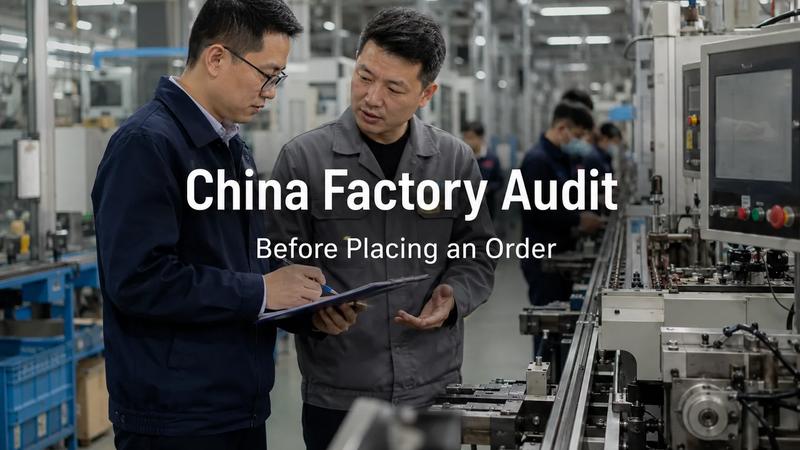
A factory visit and a factory audit serve different purposes.
A factory audit has a defined decision, scope, criteria, and evidence requirement.
See How to Audit a Factory in China Before Placing an Order for that separate process.
How Kelsy May Structure a 5 to 7 Day China Sourcing Trip
There is no universal itinerary, but Kelsy has a practical structure she may use when the exhibition, supplier locations, and project allow it.
Days 1 to 2: Trade fair
Use the first part of the trip for supplier discovery and initial screening.
Day 3: Deeper supplier discussions
Spend more time with suppliers that looked most relevant after the first rounds of meetings.
Remaining days: Factory visits and other meetings
Arrange factory visits or additional supplier discussions for companies that justify deeper investigation.
Kelsy leaves some time open in the trip schedule.
Travel takes time. Unexpected sourcing opportunities come up. Overseas buyers may also want some leisure time while they are in China.
The actual schedule should depend on:
- exhibition dates;
- supplier locations;
- travel distance;
- number of product categories;
- project urgency;
- buyer priorities.
Prepare Your Communication Setup Before Arriving in China
This is a practical issue, but it can disrupt an otherwise well-planned sourcing trip.
Kelsy has encountered overseas buyers who arrived without preparing their connectivity and then struggled to access communication tools they normally relied on.
Before travelling, make sure you have a workable way to access:
- supplier contact details;
- email;
- messaging;
- product specifications;
- cloud documents;
- booking information.
Do not discover this problem on the morning of your first supplier meeting.
Test the communication workflow you intend to use before the trip begins.