
A familiar supplier can still send an outdated invoice, type one digit incorrectly, or have its email account compromised. Payment review should not depend on an old email thread or a bank account copied from the last order. The buyer needs to confirm who is being paid, why the money is due, which order it belongs to, and whether the agreed milestone has actually been reached.
This checklist covers sample fees, tooling, deposits, production balances, freight, warehouse charges, and other supplier-related payments. It follows the payment from request to reconciliation: review the entity and invoice, verify the bank account, confirm the order milestone, approve the transfer, obtain receipt confirmation, and store the evidence. Use the sections that fit the transaction; payment practices differ by supplier, bank, currency, and buyer policy.
Verification and internal approval may help identify obvious discrepancies. They cannot rule out fraud, bank error, supplier default, or loss of funds. For a large transfer, an unusual account change, suspected fraud, a bank hold, or a legal dispute, contact the buyer’s bank promptly and use verified supplier management contacts. Qualified legal, banking, payment, fraud, or regulatory advice may also be needed. Kelsy is not a bank, payment provider, auditor, insurer, or law firm.
1. Identify the exact payment purpose
Start a payment request that names the purpose. It may be a sample or courier fee, mold charge, product deposit, packaging setup, artwork fee, production balance, inspection charge, freight payment, warehouse fee, spare-parts payment, approved order addition, refund adjustment, or credit from a previous order. The label should tell finance what is being purchased or released.
Record the supplier, purchase order, proforma invoice, payment stage, currency, amount, reason, due date, approver, and supporting documents. Avoid references such as payment, goods, or deposit without an order identifier. Someone reviewing the bank statement months later should be able to connect the transfer to one approved order and one invoice version.
| Field | What to record | Source |
|---|---|---|
| Payment purpose | Sample, tooling, deposit, balance, freight, or other approved charge | PI, PO, or approved change |
| Order reference | Supplier, PO, PI, and buyer project number | Controlled order files |
| Amount | Currency, amount due now, previous payments, and remaining balance | Payment reconciliation |
| Release condition | The milestone or document that makes payment due | PO, contract, PI, and approval record |
2. Confirm the supplier and payment entities
List the supplier’s legal company name, trading name, registration name and address, PI issuer, contracting party, bank beneficiary, exporter where relevant, factory name, and the sales, finance, and management contacts. A factory, trading company, Hong Kong company, mainland company, exporter, and payment beneficiary may be connected, but they are not automatically the same legal entity.
Ask the supplier to explain material differences in writing. Compare the contracting company, invoice issuer, beneficiary, email domain, and previous verified records. If an unrelated entity appears without a clear commercial reason, pause the transfer and investigate the relationship. Matching names are useful evidence, but they do not prove that a payment request is genuine.
Use the China Supplier Verification Checklist for Overseas Buyers to organize registration, business identity, contact, and supplier-background checks before relying on a new payment entity.
For independent supplier checks before a larger commitment, review the Supplier Verification service .
3. Review the proforma invoice
Check the PI number and date, supplier and buyer legal details, PO reference, product description, model, quantity, unit price, total, currency, deposit, balance, payment schedule, bank charges, Incoterm, delivery term, estimated lead time, validity period, and bank instructions. Note the beneficiary, bank, address, SWIFT or BIC, account number, accepted currency, and any correspondent-bank details.
Recalculate quantity multiplied by unit price. Add tooling, setup, packaging, freight, and other approved charges, then subtract discounts and credits. Confirm that deposit plus balance equals the agreed total. The amount and account shown on the approved PI must match the information entered for the bank transfer.
A PI can support the commercial record, but its legal effect and required form depend on the transaction and jurisdiction. Do not treat a signature or company stamp as a substitute for account verification. Save the approved version and mark earlier versions as superseded.
Check price inclusions and supplier assumptions with How to Compare Supplier Quotations from China before accepting the PI total.
The Pricing, MOQ & Quotation Guide explains MOQ, customization charges, payment terms, Incoterms, and common quotation gaps.
4. Match the payment to the purchase order
Review the supplier, PI number, PO number, models, quantities, prices, currency, deposit percentage, shipping term, packaging and tooling charges, approved revisions, and delivery schedule together. Payment should not be approved as a separate finance task when the order files still disagree.
Resolve differences between the quotation, PI, PO, and final requirements before releasing funds. Supplier urgency does not settle a mismatch. If production is waiting, record which item is open, who will correct it, and whether the buyer is prepared to release only material preparation or no work at all.
Use the Order Requirements Checklist to confirm the product, quantity, packaging, labeling, and delivery basis behind the payment.
5. Verify the beneficiary name
Compare the exact beneficiary name with the approved PI and the verified supplier entity. Check the company suffix, spelling, punctuation where relevant, account-holder country, and whether the account is corporate or personal. Note any change from previous successful transfers.
A name can differ because of bank character limits, translation, group structure, or use of an export company. That explanation may be legitimate, but it still needs independent confirmation and supporting documents. A personal name, unexpected country, new beneficiary, or unrelated logistics company calls for a higher level of review, not an automatic accusation or an automatic payment.
6. Verify the full bank details
Check the beneficiary and address where required, bank and branch, bank address, account number, IBAN where applicable, SWIFT or BIC, local bank code, routing details, accepted currency, correspondent bank, payment-reference requirements, and account country. Compare the approved PI, bank-detail letter, prior verified record, and the actual transfer screen.
For a new or higher-risk account, use at least two independent channels where practical. Call a previously verified number, speak with a known manager, use the established company domain, compare previous successful records, or obtain bank confirmation where available. A reply in the same email thread and a new phone number supplied in that message are not independent checks.
| Item | Primary source | Independent check | Result |
|---|---|---|---|
| Beneficiary and account | Approved PI or signed bank-detail letter | Known management contact or prior verified record | Match, explained difference, or unresolved |
| Bank and country | Bank instructions | Known supplier contact and buyer bank review | Expected or requires escalation |
| Currency and routing | Supplier finance instruction | Sending bank confirmation where available | Accepted route and fee treatment |
7. Handle a bank account change request
Pause the payment when bank details change. Do not use contact information found only in the change message. Reach the supplier through a previously verified phone number, company channel, or known manager. Confirm the reason, new beneficiary, account country, effective date, and whether the old account remains valid.
Request an updated PI or bank-detail letter and compare the new account with the contracting and supplier entities. Record who confirmed the change, the channel, date, and exact details. Then send the payment request through internal approval again. A plausible story about a new bank, currency account, restructuring, export entity, or compliance issue still needs evidence.
Email compromise can occur inside a real order and a genuine email thread. Look closely at the sender and reply-to addresses, timing, writing style, and any request for secrecy or urgent release. If the verified supplier denies the change, preserve the messages and contact the buyer’s bank or fraud team before taking further action.
8. Confirm the currency and fee basis
Compare the quotation currency, PI currency, account currency, transfer currency, and the currency the supplier expects to receive. Check the code rather than relying on a symbol. USD, EUR, CNY or RMB, and HKD are not interchangeable instructions.
Confirm who bears the sending, correspondent, receiving, and conversion fees. Ask whether the supplier requires the gross transfer amount or a net amount after agreed deductions. A transfer to an account that does not support the currency may be returned, converted, or credited short. The buyer’s bank should confirm available routing and fee options.
9. Reconcile the exact amount
Build a payment reconciliation showing order value, deposit already paid, additional approved charges, credits, refunds, discounts, freight adjustments, amount due today, and balance remaining. Tie every change to an approved PI, credit note, or order revision.
This step catches duplicate invoices, old PI versions, forgotten sample credits, full-order payments entered instead of deposits, and balances released before deductions are recorded. If one transfer covers two orders, allocate the amount clearly by PI and PO so the supplier’s finance team can post it correctly.
| Order value | Previously paid or credited | Payment today | Balance after payment |
|---|---|---|---|
| Approved PI total | Deposit, sample credit, refund, or credit note | Exact amount and currency submitted | Unpaid amount by order and stage |
10. Review deposit terms
Confirm the deposit percentage and amount, what it releases, whether materials or tooling will be purchased, whether production starts, whether separate packaging fees apply, and when lead time begins. Record what happens if specifications change, the order is cancelled, or material costs have already been committed.
A deposit percentage often seen in the market is not automatically appropriate for this order. Customization, tooling, material commitments, order size, supplier relationship, production risk, and negotiation all affect the terms. Ask what the money funds and what evidence the buyer will receive at the next milestone.
11. Separate deposit payment from production release
Before deposit payment, confirm the quotation, PI, PO, specifications, quantity, packaging, sample status, artwork, delivery timeline, bank details, and production-release condition. Payment and permission to start production are related decisions, but incomplete requirements can make them unsafe to combine.
List every outstanding item with an owner, due date, and buyer decision. State whether the supplier may buy materials, prepare tooling, begin only a limited step, or wait for written release. Save the production-release message separately from the bank receipt.
12. Define balance payment conditions
Replace phrases such as balance before shipment or balance when goods are ready with measurable conditions. The trigger might include production completion, internal QC, approved samples, packing completion, an inspection result, finished rework, warehouse receipt, shipping-document approval, or authorization to release cargo.
Write what counts as ready, who confirms it, what evidence is required, whether inspection and reinspection apply, whether documents must be approved, and whether the shipment can be held while funds clear. The supplier and buyer should understand the same event before the order reaches the balance stage.
13. Review inspection before the balance
Confirm whether inspection was required, booked, completed, and reported. Review major and minor findings, quantity differences, functional failures, packaging issues, corrective action, reinspection, approved exceptions, and the buyer’s disposition. A passed inspection does not establish that every commercial payment condition has been met.
Prepare the scope and evidence with the China Pre-Shipment Inspection Checklist .
Use the Quality Inspection Preparation Guide to define product, packaging, quantity, sampling, functional, and reporting points before the booking, so the inspection report can support the agreed balance-payment decision.
Production completion also does not require the buyer to ignore unresolved quality issues. Payment deductions, withholding, rejection, and contractual disputes should be handled under the agreement and qualified advice. The operational task is to document the finding, supplier response, buyer decision, and payment status.
If an independent check is needed, review the Quality Inspection service before releasing the balance.
14. Check production milestones
Link payment to evidence of the agreed milestone: materials purchased, production started, first units reviewed, mid-production progress, production completed, rework closed, packing finished, goods ready for inspection, or warehouse delivery. Name the evidence and date in the payment request.
Photos can support a progress update, but they do not prove the quality or quantity of the full order. Supplier statements do not replace inspection, and warehouse receipt does not prove compliance with product specifications. Use the evidence for the limited fact it can show.
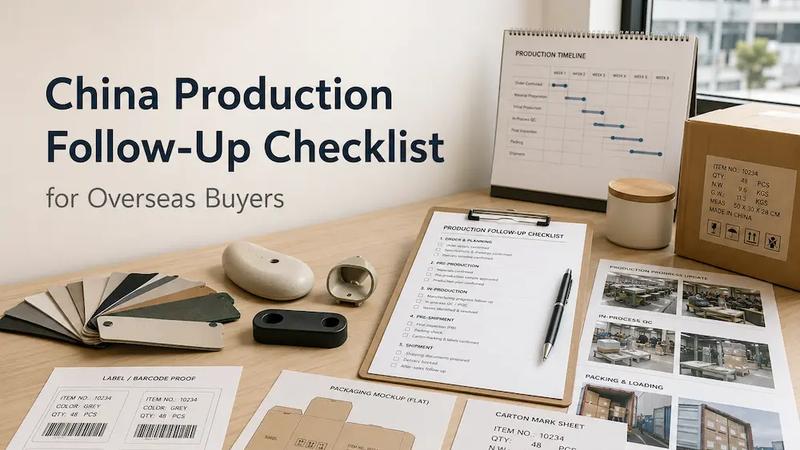
Track the underlying dates, quantities, issues, and approvals with the China Production Follow-Up Checklist for Overseas Buyers .
For ongoing milestone coordination, see the Production Follow-Up service .
15. Review personal or third-party accounts
A request to pay a personal, employee, salesperson, relative, unrelated trading-company, freight-forwarder, cryptocurrency, or money-transfer account needs stronger review. The buyer should not send product funds to a personal or unrelated account without a documented business reason, written authorization, internal approval, and appropriate professional risk review.
If a third party is genuinely collecting payment, confirm the legal relationship, invoice issuer, contract amendment, authorization, tax and accounting treatment, refund responsibility, dispute responsibility, and bank or compliance implications. Ask the buyer’s finance, bank, and legal advisers whether the arrangement is acceptable.
16. Check for email and payment fraud signals
Pause when a message introduces a sudden bank change, urgent deadline, new email address, altered domain, confidential instruction, unexpected beneficiary country, late-arriving contact, strange tone, changed invoice amount, or a reply-to address that differs from the sender. A PDF attachment does not make new bank details reliable.
Preserve the message, compare addresses character by character, call the supplier through verified details, confirm with known management, and alert internal finance. If funds were already sent, contact the bank immediately. Review other pending payments and change compromised credentials where relevant. Keep a written record of what was checked and decided.
17. Establish internal payment approval
The approval record should include supplier, PO, PI, purpose, currency, amount, beneficiary, account, verification method and date, supporting files, order milestone, inspection status, requester, reviewer, approver, transfer date, bank reference, and notes. Attach the actual approved documents rather than links to an uncontrolled chat.
A maker-checker process, two-person review for significant transfers, separation between purchasing and payment approval, account-change reapproval, payment limits, and a duplicate check may reduce avoidable mistakes. The right controls depend on the buyer’s size, systems, risk, and bank arrangements.
18. Prepare the bank transfer
Before submission, read back the beneficiary, account number, SWIFT or BIC, bank and country, currency, amount, reference, charges instruction, correspondent bank, payment purpose, invoice reference, sending account, and execution date. Compare the bank screen with the approved payment request, not with a fresh email.
OUR, SHA, and BEN are common fee instructions, but banks may apply them differently and correspondent charges can still affect the received amount. Confirm who bears sending, intermediary, receiving, and conversion fees. Ask the buyer’s bank when the option or route is unclear.
19. Use a traceable payment reference
Use a short reference that the supplier can allocate, such as Deposit for PI KS-2026-018 / PO CTP-214. Include the supplier or order reference, PI, PO, and deposit or balance stage when the bank field permits. Do not use an inaccurate purpose or invent documents to fit a transfer route.
Tell the supplier’s finance contact what reference to expect. If the bank truncates it, send the bank transaction reference separately after payment while protecting sensitive account data.
20. Save the transfer receipt
Save the bank confirmation, value date, currency, amount, beneficiary, fees, sender account, transaction reference, approval, PI version, PO, contract where applicable, and account-verification record. Store the receipt with the order instead of leaving it only in one employee’s inbox.
Limit distribution and redact bank or personal details when a full receipt is not needed. Public examples, shared supplier folders, and website content should not expose complete account numbers or private financial information.
21. Confirm supplier receipt and allocation
Tell the supplier the payment date, amount, currency, PI, PO, transaction reference, and expected payment stage. Share the receipt where appropriate. Ask supplier finance to confirm the amount credited, allocation to the correct order, deposit or balance status, remaining amount, and resulting production or shipment release.
Payment sent, received by an intermediary bank, credited to the beneficiary account, and allocated to the order are different statuses. A completed message in the buyer’s banking portal does not by itself prove that supplier finance has posted the correct amount to the correct order.
22. Trace a delayed or unmatched payment
Check the value date, SWIFT information, beneficiary, account currency, correspondent bank, fees, payment reference, compliance review, and any return notice. Ask the sending bank for a trace or payment message where available, and ask the supplier bank to check incoming funds.
Do not send a second payment while the first transfer is still untraced. Keep every bank reference and update the reconciliation. If account details may be wrong, contact the buyer’s bank immediately rather than waiting for the supplier to solve the problem alone.
23. Respond to suspected fraud or an incorrect transfer
If money went to the wrong account, bank details appear falsified, the supplier denies the account, email compromise is suspected, or a duplicate was sent, contact the sending bank immediately and request a recall or hold where possible. Preserve emails, invoices, approvals, and transfer records.
Notify internal finance and management, contact the supplier through verified channels, and seek qualified legal or fraud assistance. Follow bank and authority instructions. Recovery depends on timing, account status, banks, jurisdiction, and the facts; approval controls do not guarantee recovery of funds.
24. Store the complete payment file
Keep the approved quotation, final PI, PO, contract where applicable, bank-detail verification, account-change confirmation, internal approval, receipt, supplier receipt confirmation, payment reconciliation, inspection report, production evidence, credit note or refund record, and final status in one order folder.
Use simple filenames such as KS-2026-018_PI_V3_FINAL.pdf and KS-2026-018_Deposit-Payment_2026-07-14.pdf. Separate drafts from final files and restrict access to sensitive bank data. The file should support the next payment, finance reconciliation, shipment release, or dispute review without reconstructing the order from chat history.
25. Common supplier payment mistakes
Paying an old PI or failing to match it to the PO can release the wrong amount for the wrong order. Confirm the approved version and reconcile it. Trusting an account change sent only by email, or calling the new number inside that message, leaves the verification inside the same potentially compromised channel. Use earlier verified contact details.
Paying a personal or unrelated account without adequate review can separate the funds from the contracting party. Document the relationship and obtain professional review. Wrong currency, ignored intermediary fees, or an unclear reference can cause returns, conversion, shortage, or an unmatched receipt. Confirm the route and fee allocation before submission.
Paying the full order instead of the deposit, overlooking credits, or combining orders without allocation creates reconciliation problems. Use the payment table and duplicate check. Releasing the balance from production photos alone ignores quantity and quality questions. Apply the agreed inspection and milestone conditions.
Allowing one person to request and approve a significant payment increases error and fraud exposure. Use appropriate separation. Sending a duplicate while tracing the first payment can double the loss. Confirm supplier receipt, keep the bank trace, and store the final records. If fraud is suspected, contact the bank without delay.
26. Final China supplier payment checklist
Complete the checklist below for the actual payment. Each checked item should point to an approved file, verified contact, bank screen, milestone record, or named decision. Leave an item open when the evidence is missing and assign an owner; memory and supplier urgency are not substitutes for verification.
The final output is a reconciled payment record: who requested the funds, why they were due, how the account was checked, who approved the transfer, what the bank executed, what the supplier received, and what order step was released. Keep it with the purchase order until the order and any credits or refunds are closed.