
Supplier search is not about collecting as many names as possible. A long list can still be weak if the suppliers do not match your product, order size, packaging needs, or target market.
A focused search gives you a shortlist you can actually review. From there, you can move into supplier verification , quotation comparison, samples, and order checks with fewer blind spots.
This checklist does not prove that a supplier is reliable. It helps you remove poor-fit options earlier and decide which suppliers deserve a closer look.
1. Define What You Need Before Searching
Start with a short buying brief. Suppliers cannot quote or confirm fit properly if the request is only a product name and a target price.
- Product name, category, and intended use
- Size, material, function, technical details, and any must-have specs
- Target quantity, expected MOQ range, and first-order plan
- Packaging, logo, label, or private label needs
- Target market, compliance needs, certificates, labels, or testing questions
- Photos, drawings, samples, or reference links
2. Choose the Right Supplier Type
The right supplier type depends on your order size, customization level, product complexity, and how much coordination you need.
- A manufacturer may fit when the product is specific, technical, or needs production control.
- A trading company may fit when you need several product types, smaller quantities, or easier communication.
- A sourcing company can help with supplier search, comparison, follow-up, and order coordination.
- A wholesale supplier may work for standard products, trial orders, or fast-moving catalog items.
- A specialized factory is usually safer than a general supplier when the product has strict material, function, or compliance requirements.
3. Check Product Fit
Do not assume a supplier is suitable because one product photo looks close. Check whether they regularly handle your product type.
- Does the supplier actually make or regularly handle this product?
- Are the product photos, specifications, and catalog items relevant to your request?
- Can they explain material, function, packaging, production limits, and technical details?
- Be careful with suppliers who only give generic answers or avoid product-specific questions.
4. Review Company and Export Background
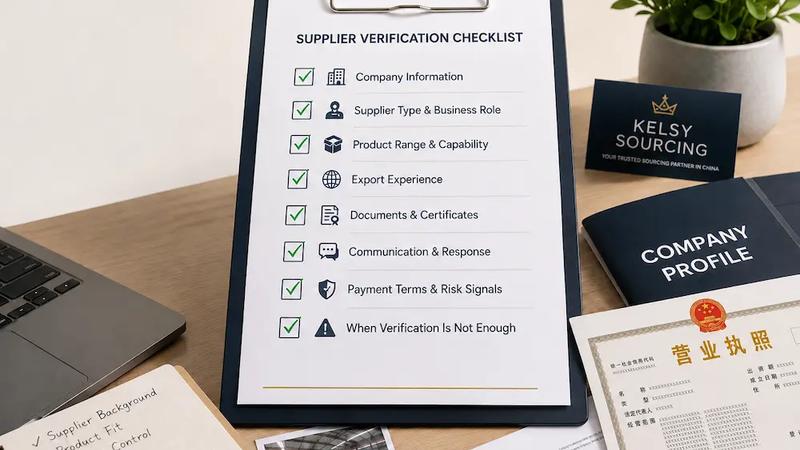
Basic company checks help you understand who is replying and whether their background matches the sourcing request.
- Company name, business scope, office or factory location, and registration details
- Years in business, main product categories, and export markets served
- Business license, platform profile, website, quotation, and invoice details
- Do not rely on one document only. Compare details across messages, files, and payment requests.
5. Compare MOQ, Customization, and Order Flexibility
MOQ tells you whether the supplier fits the order you can actually place, not the order they prefer to sell.
- MOQ for standard product, logo, packaging, and custom versions
- MOQ for custom size, color, material, mold, or tooling
- Sample availability, sample cost, and what the sample can prove
- Small order support and whether the supplier’s flexibility matches your real plan
6. Evaluate Communication Quality
Good supplier communication is specific. It answers the question, asks for missing details, and stays consistent from message to quotation.
- Answers are specific, written down, and useful for buyer review.
- The supplier asks specific questions about product details, packing, quantity, or target market.
- Details stay consistent across messages, quotations, invoices, and files.
- Warning signs include vague claims, payment pressure, avoided questions, or changing details.
7. Look for Early Risk Signals
Risk signals do not always mean a supplier is bad, but they do mean the supplier needs more checking before you continue.
- A price far lower than normal, copied product photos, or unrealistic lead time
- Refusal to share company details, business information, or basic registration records
- Bank account name mismatch, sudden bank account changes, or payment pressure
- Overpromising on capability, certification, production speed, or product quality
8. Create a Supplier Shortlist
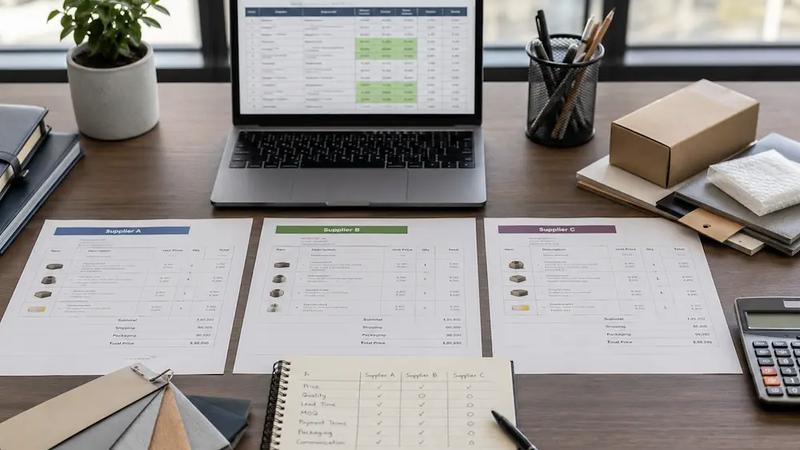
A useful shortlist is small enough to compare properly. For most projects, three to five realistic suppliers is enough for the next round.
- Keep 3-5 supplier options that match the product, quantity, and order plan.
- Compare product fit, MOQ, lead time, communication, export experience, and risk notes.
- Do not choose only by the lowest price. Use price after you know what is included.
- Move shortlisted suppliers into verification, quotation comparison, sample review, or product sourcing follow-up.
9. Supplier Search Checklist Table
Use this table when you are building the first shortlist. Empty notes are useful because they show which supplier details still need confirmation.
| Check Item | What to Review | Notes |
|---|---|---|
| Product fit | Does the supplier match your product category and technical needs? | |
| Supplier type | Manufacturer, trading company, sourcing company, or wholesaler | |
| MOQ | Standard product, logo, packaging, or custom version MOQ | |
| Customization | Size, color, material, logo, packaging, or mold requirements | |
| Export experience | Markets served, export documents, and shipment familiarity | |
| Communication | Specific replies, relevant questions, and consistent details | |
| Company details | Company name, location, registration, and business scope | |
| Risk signals | Very low price, vague answers, payment pressure, or bank mismatch | |
| Next step | Verification, quotation comparison, sample, or inspection |